Phil Mickelson Net Worth 2026 - Five Majors, One Controversial Gamble, and a Half-Billion Dollar Legacy
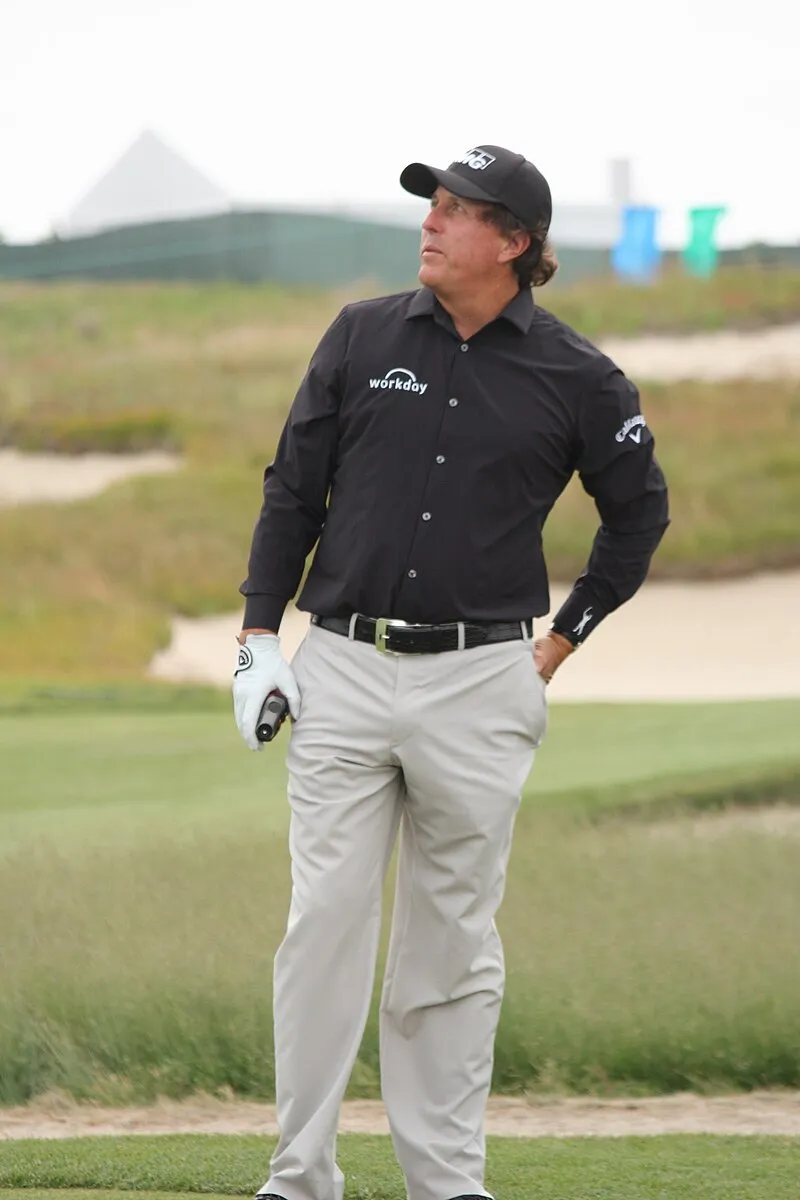
Photo of Phil Mickelson, via Wikimedia Commons
No financial biography in professional golf is quite as layered, surprising, or instructive as Phil Mickelson's. The left-handed Californian who became one of the sport's most beloved figures — and later one of its most polarizing — has assembled a fortune that industry analysts estimate at approximately $500 million, a figure that places him among the wealthiest athletes in American sports history. Understanding how Mickelson built, spent, risked, and ultimately preserved that fortune requires examining a career that has spanned more than three decades, five major championships, dozens of endorsement relationships, and one of professional sport's most consequential defections.
The Foundation: Forty-Five PGA Tour Victories
Mickelson turned professional in 1992 after a celebrated amateur career that included a PGA Tour victory at the 1991 Tucson Open while still enrolled at Arizona State University — a feat that announced his arrival with unmistakable authority. What followed was one of the most decorated careers in tour history: 45 official PGA Tour victories, including three Masters titles (2004, 2006, 2010), a U.S. Open championship (2013 at Merion), and a PGA Championship (2005 at Baltusrol).
His cumulative official prize money through 2026 has surpassed $95 million, a figure that ranks among the highest in PGA Tour history. The headline moment within that earnings record — his 2021 PGA Championship victory at Kiawah Island at age 50, making him the oldest major champion in golf history — delivered not only a winner's check exceeding $2 million but a commercial renaissance that added substantially to his endorsement value at a stage of his career when most players have long since retired.
Beyond official earnings, Mickelson collected substantial appearance fees throughout his career, particularly in Asia and the Middle East, where his global recognition commands premium compensation. Estimates suggest these appearance arrangements added tens of millions to his career earnings over time.
The Endorsement Empire
For the better part of two decades, Mickelson was among the most commercially active players in professional golf. His long-standing relationship with Callaway Golf — one of the most enduring equipment partnerships in the sport's history — has been a financial cornerstone. Callaway's investment in Mickelson reflected his unmatched visibility and his genuine influence over equipment purchasing decisions among recreational golfers who admired his creative shotmaking.
His apparel and footwear partnership with KPMG, Rolex, Amstel Light, ExxonMobil, and various other corporate sponsors created an endorsement portfolio that, at its peak, generated an estimated $40 million to $50 million annually. Forbes repeatedly ranked him among the world's highest-paid athletes, with his endorsement income consistently exceeding his on-course earnings by a substantial margin.
The Mickelson commercial brand was built on a carefully cultivated image: the approachable family man, the creative risk-taker, the player who connected with fans through high-five celebrations and self-deprecating humor. That image, developed over decades, proved enormously durable even as his competitive results fluctuated.
The Documented Losses and Financial Complexity
Any honest accounting of Mickelson's financial life must acknowledge the well-documented reports of his gambling activity. Multiple credible journalistic investigations have described losses running into the tens of millions of dollars across sports betting, casino play, and other wagering activities over an extended period. Mickelson himself has acknowledged struggling with what he described as a gambling problem.
These losses represent one of the most significant subtractions from what would otherwise be an even more extraordinary net worth. They also underscore a broader lesson that financial analysts frequently draw from high-earning athletes: income alone does not guarantee wealth preservation. Mickelson's story illustrates that even the most commercially successful athletes can face significant financial headwinds from personal behavior.
Nevertheless, the scale of his earnings — both from the tour and from endorsements — was substantial enough to absorb these setbacks while still leaving a fortune of considerable magnitude.
LIV Golf: The Controversial Pivot That Changed Everything
In 2022, Mickelson became one of the most prominent players to join LIV Golf, the Saudi-backed breakaway circuit that fundamentally disrupted professional golf's commercial and competitive landscape. His decision arrived in the wake of widely reported comments about the Saudi government's human rights record — remarks that he acknowledged were poorly considered — and triggered a temporary withdrawal from public life and the suspension of several major endorsement relationships.
The financial terms of Mickelson's LIV Golf agreement have never been officially confirmed, but multiple credible reports have placed the figure in the range of $200 million or more as a guaranteed package. If accurate, this arrangement represented one of the largest single financial transactions in sports history, transforming the commercial calculus of his later career entirely.
The trade-off was significant. Several longstanding sponsors, including KPMG and Amstel Light, parted ways with Mickelson in the aftermath of his public comments and LIV affiliation. The reputational damage was real and measurable. Yet the sheer scale of the LIV financial commitment — guaranteed money independent of competitive results — meant that Mickelson's net worth likely increased substantially even as his public standing became more contested.
Real Estate and Business Investments
Mickelson's wealth management has extended into real estate, with properties in California, Arizona, and other markets that have appreciated significantly over the decades of his career. His business interests have included equity stakes in various ventures and investments managed through advisors who have navigated the complex financial landscape that surrounds ultra-high-net-worth athletes.
His involvement in golf course design and development has been more limited than some contemporaries, but the broader real estate portfolio has contributed meaningfully to his overall financial position.
Psych-K and Personal Brand Reinvention
In recent years, Mickelson has invested in personal brand reinvention, engaging more openly with health, wellness, and personal development topics through social media and public appearances. He launched Amen Putter and has been involved in various entrepreneurial projects that leverage his name recognition in the golf and broader sports community. These ventures, while modest in scale relative to his overall fortune, reflect an ongoing effort to maintain commercial relevance in a media landscape that rewards authentic personal engagement.
A Legacy Measured in Hundreds of Millions
At 55 years of age in 2026, Phil Mickelson's active competitive career has wound toward its conclusion, but his financial legacy is firmly established. The $500 million estimate, which accounts for prize money, peak endorsement income, LIV Golf compensation, real estate, and business interests — offset by documented losses and departed sponsorships — reflects a career of almost unparalleled commercial productivity.
For American golf fans who grew up watching Mickelson thrill galleries with audacious shots from impossible lies, his financial story carries the same quality of improbable drama. The man who always seemed to be going for the risky play rather than the safe layup has brought that same temperament to his financial life — with results that have been, on balance, as spectacular as any flop shot he ever holed.